| Foreward |
A few years ago—I’m not sure when exactly—our society experienced the Great Shower Water Awakening. I’m referring to the dichotomy between hard and soft genres of water in bathing—but its potentially deleterious effects on our skin and hair are a frequent topic of conversation.
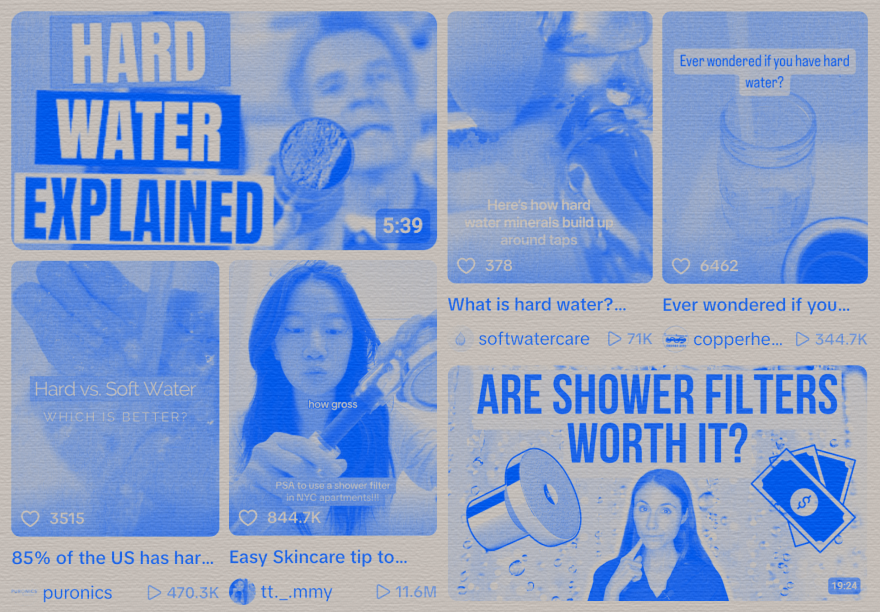 |
| A smattering of said shower filter discourse. |
At the risk of sounding like Larry David, I’ve lived over a quarter of a century without knowing a single thing about the hardness of my shower water, and I’d like to think I was doing just fine. That’s why I made the irresponsible decision as a beauty writer to tune all of the discourse out—at least, for as long as I could. This isn’t to say I haven’t been filtering my shower water—I have—but I didn’t really have a good reason why other than the fact that I liked the aesthetic. I guess you could say it’s rather fitting that I come clean for you all. But today is the day that I finally opened my eyes to this water conversation.
| It’s time I investigate what it means to have minerals in my water, and most importantly, what it means for my skin. |
|
|
|
|
| Hard vs. Soft Water |
F irst, there’s something we have to address. How can water be hard or soft when it is, ultimately, wet? Incredible question. According to the International Journal of Preventative Medicine, hard water is often defined as water that contains “a high concentration of calcium and magnesium ions.” Several other dissolved metals—including aluminum, barium, strontium, iron, zinc, and manganese—can also contribute to water hardness. Technically speaking, hard water has 120 to 180 parts per million of calcium and magnesium, whereas soft water lands below <17 parts per million.
Now you may be asking: isn’t mineral-rich a good thing? Why is ‘hard water’ being used as a threat? Again, fabulous questions. For starters, the WHO has ensured us that there’s no reason to be concerned about water hardness.
| In fact, hard water can provide some supplementary benefits of calcium and magnesium when consumed orally. |
Bathing in hard water, however, is a little less clear (figuratively speaking). While it’s not overwhelmingly common, higher levels of hardness in water are associated with atopic dermatitis (a.k.a. eczema), particularly in children. According to a recent study looking at Japanese schoolchildren, “prevalence of atopic eczema was significantly higher in the highest water hardness category than that in the lowest.” This is a bit of a correlation-not-causation situation, since there are some other factors (read: contaminants) at play. |
|
|
|
| The actual issue: contamination |
Here is the big headline: hard water on its own is not actually a worthy scapegoat for our skin rashes and brittle hair. No no—the real culprit, it seems, is chlorine. Well, chlorine, hydrogen sulfide, and other heavy metals and man-made contaminants that originate from pesticides and other toxic matters. These are thought to cause brittle, weakened hair and red, itchy, dry skin. Dr. Dorfman, a Beverly Hills plastic surgeon, recently explained to Harper’s Bazaar that:
| These dermalogical issues are likely the result of an impaired skin microbiome and moisture barrier, a typical cause of premature aging, acne, and other skin health concerns. |
With contamination of tap water becoming a rising concern in our country, it makes sense that dermalogical issues are revealing themselves, and therefore the rise of shower filters and this conversation at large. |
|
|
|
| What do we do about it? |
F irst off, it’s worth investigating the type of water that comes out of your faucets before you decide to install a filter. There are plenty of testing kits available on the market, although they’ll cost you a pretty penny.
If you’re primarily concerned about hard minerals, you can perform an at-home “soap test.” You’ll add pure dish soap (i.e. Dr. Bronner’s, Jason), not body wash or detergent, to a bottle, fill it ⅓ full with water, and shake it around to see how the bubbles behave. If the bubbles are fluffy and clear, you’re working with soft water. (The inverse would be milky and cloudier).
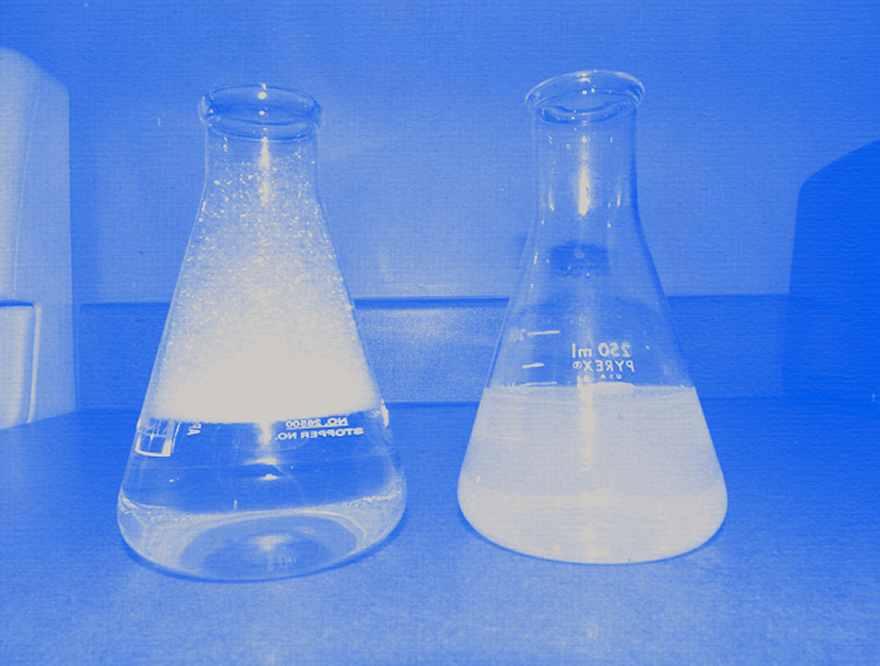 |
| To the left: soft water; to the right: hard water. |
In a similar vein, you should be able to tell the general hardness of your water based on how your body wash is lathering. If you’re taking highly sudsy showers, you’ve got soft water. If it’s hard to get a lather at all, you’re probably working with some mineral-heavy tap. Don’t feel bad, most Americans are.
Again, because topical issues like dryness and irritation can’t be boiled down to a simple hard vs. soft, a more robust testing kit could be the move if you’re dealing with specific concerns. If these results give you some funky impurities, you’ll probably want to consider investing in a filtration system. Just make sure it’s NSF-certified and uses KDF-55 or a carbon filtration system if chlorine is your main concern. I can’t say I’ve personally tried a ton of them, but my Jolie was a piece of cake to install, so that counts for something.
|
|
|
|
| HARD WATER HEROES |
 |
 |
 |
| Comfort Cleanse |
Buffing Bar |
Smoothing Solution |
|
| This all being said, if I’m speaking from personal experience alone, I’ve noticed the most improvement in my skin health from simply stepping up my soap game. Since hard water is something 85% of Americans deal with (whoa), using body care that effectively hydrates the skin and gently (GENTLY) exfoliates while soothing inflammation is going to be key. It was for me. |
|
|
|
|
|
|